

Direct Feed from Regulator
Alibaba's Qwen AI assistant has deepened its connection to China's National Medical Products Administration (NMPA), integrating millions of drug and medical device records directly into the app's responses. According to AIBase's coverage, the update gives users access to authoritative information on pharmaceuticals and equipment that is updated in real time from the government's database. The move marks one of the most concrete examples yet of a consumer-grade AI chatbot being backed by official regulatory data in a highly sensitive domain like healthcare.
The integration means that when users ask Qwen about a specific medication or medical device, the assistant can pull verified details such as approved indications, side effects, manufacturer information, and regulatory status. Previously, such queries would rely on general web crawling or third-party sources, which risked outdated or inaccurate information. Now, the answers carry the weight of the NMPA's official records—a significant step for trustworthiness in AI-generated health advice.
Millions of Records, One API
Alibaba did not disclose the exact number of records ingested, but the AIBase report states the integration covers 'millions of drug and device records.' Given that China's NMPA maintains more than 150,000 approved drug products and hundreds of thousands of medical device registrations, a 'millions' figure suggests the inclusion of historical data, variations, and possibly regional approval differences. The data is likely accessed through the NMPA's public-facing data platform, which has been gradually opened to authorized third parties.
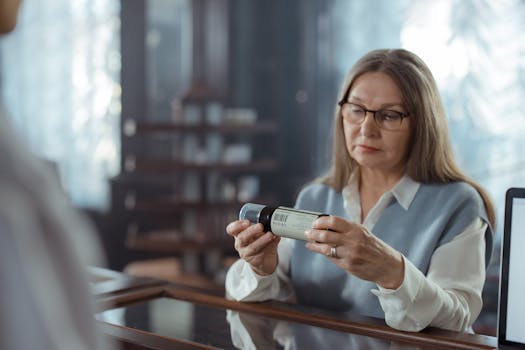
This is not Alibaba's first foray into healthcare AI. The company already offers medical imaging diagnostics and drug discovery platforms. However, the Qwen app's new capability targets the much larger consumer base—everyday people who search for medication information using their phones. By embedding regulatory data directly into a chatbot interface, Alibaba reduces the friction of navigating official websites and eliminates the need for users to cross-check AI-generated answers against authoritative sources.
Why This Matters: AI Meets Regulatory Accountability
The integration addresses a long-standing weakness in consumer AI assistants: the inability to reliably cite authoritative sources in high-stakes domains. While general-purpose chatbots like ChatGPT or Claude can summarize medical information from the open web, they often lack the precision required for drug safety queries. In China, where regulations on AI-generated content are tightening, offering verifiable data from a government source also helps Alibaba comply with the country's generative AI regulations, which require content to be accurate and aligned with official information.
For the broader AI community, this case study demonstrates a viable path for combining large language models with structured government databases. The approach essentially turns the Qwen assistant into a natural language front-end for the NMPA's API, while still preserving the conversational fluidity of a chatbot. It also creates a moat against competitors: other assistants that lack such deep integration will struggle to match the reliability of Qwen's drug and device answers.
Technical Implementation and Limitations

Based on the announcement, Qwen likely uses a retrieval-augmented generation (RAG) architecture, where user queries are first matched against the NMPA database to fetch relevant records, and then the language model generates a response grounded on those records. This reduces hallucinations compared to pure generative approaches. However, the system still must handle complex questions like drug interactions or off-label uses, where the NMPA data alone may be insufficient. Alibaba has not clarified how Qwen handles ambiguous or unanswerable queries, but the integration suggests a preference for conservative answers—declining to speculate beyond the official data.
Another consideration is timeliness. The NMPA frequently updates its records with new approvals, safety warnings, and recalls. Alibaba's ability to sync with these changes in near-real time will determine whether the feature remains useful. The AIBase report does not specify update intervals, but given the partnership is described as 'deep access,' daily or weekly synchronization is plausible.
Competitive Landscape and Future Directions
Other Chinese tech giants, such as Baidu with Ernie Bot and Tencent with Hunyuan, also target healthcare information. However, none have announced a similarly direct pipeline from a national regulator. Baidu's medical knowledge graph relies on its own encyclopedia and hospital partnerships, while Tencent's WeChat health features lean on third-party content providers. Alibaba's move puts pressure on competitors to negotiate their own data-sharing agreements with government bodies, which could become a new battleground in the AI assistant market.
Looking forward, this integration could expand to other regulatory domains in China, such as food safety certifications, traditional Chinese medicine databases, or medical device recalls. If successful, it might even set a template for other countries where AI assistants seek to incorporate official government data. For now, the immediate impact is on millions of Chinese consumers who can ask Qwen 'What are the side effects of this drug?' and receive a reply grounded in the NMPA's authoritative database—a small but meaningful step toward trustworthy AI in healthcare.

Commentaires